

Listed Building Consent in London: What You Can Actually Change
A client once told us the listing only covered the front elevation. The cornices, the staircase and the fireplaces were all coming out.
They were wrong, and finding out late is expensive. Listing can extend well beyond the facade. Internal features and even the layout may contribute to a building's significance.
Prime London is full of protected buildings, and they are some of the best houses in the city. You can absolutely bring one up to modern standards. You just have to know which rules you are under before the first wall comes down. The same care applies when you extend a Victorian London home without destroying its character.
Listed building consent is not the same as planning permission
They are separate consents and they answer separate questions.
You can renovate a Grade II listed home. Changes have to be assessed against the building's significance, and listed building consent may be required. Do not assume an internal alteration is exempt simply because nobody can see it from the street.
That last point catches people out more than any other. Invisible is not the same as permitted.
A conservation area and a listed building are different designations
These two get treated as one thing. They are not.
Conservation-area controls concern the character of an area. Listing concerns a particular building's special interest. Both can apply to the same property at the same time, and each brings its own requirements.
Your postcode will not tell you which you are dealing with. A neighbourhood name is not a reliable substitute for checking the actual address. Council boundaries, listed status and conservation designations all have to be confirmed for the specific property.
The interiors are protected too, not just the facade
Record what you intend to keep, early. Identify what each item needs in terms of repair, protection and storage.
Then build that retention strategy into the demolition instructions themselves. Valuable fabric is usually lost during strip-out, not during design. A cornice survives because somebody wrote it down before the strip-out crew arrived.
Original floors and finishes can often be reused. Condition, removal method, storage and compatibility with new levels or heating all affect whether that works. Allow realistically for repair where salvage cannot be guaranteed.
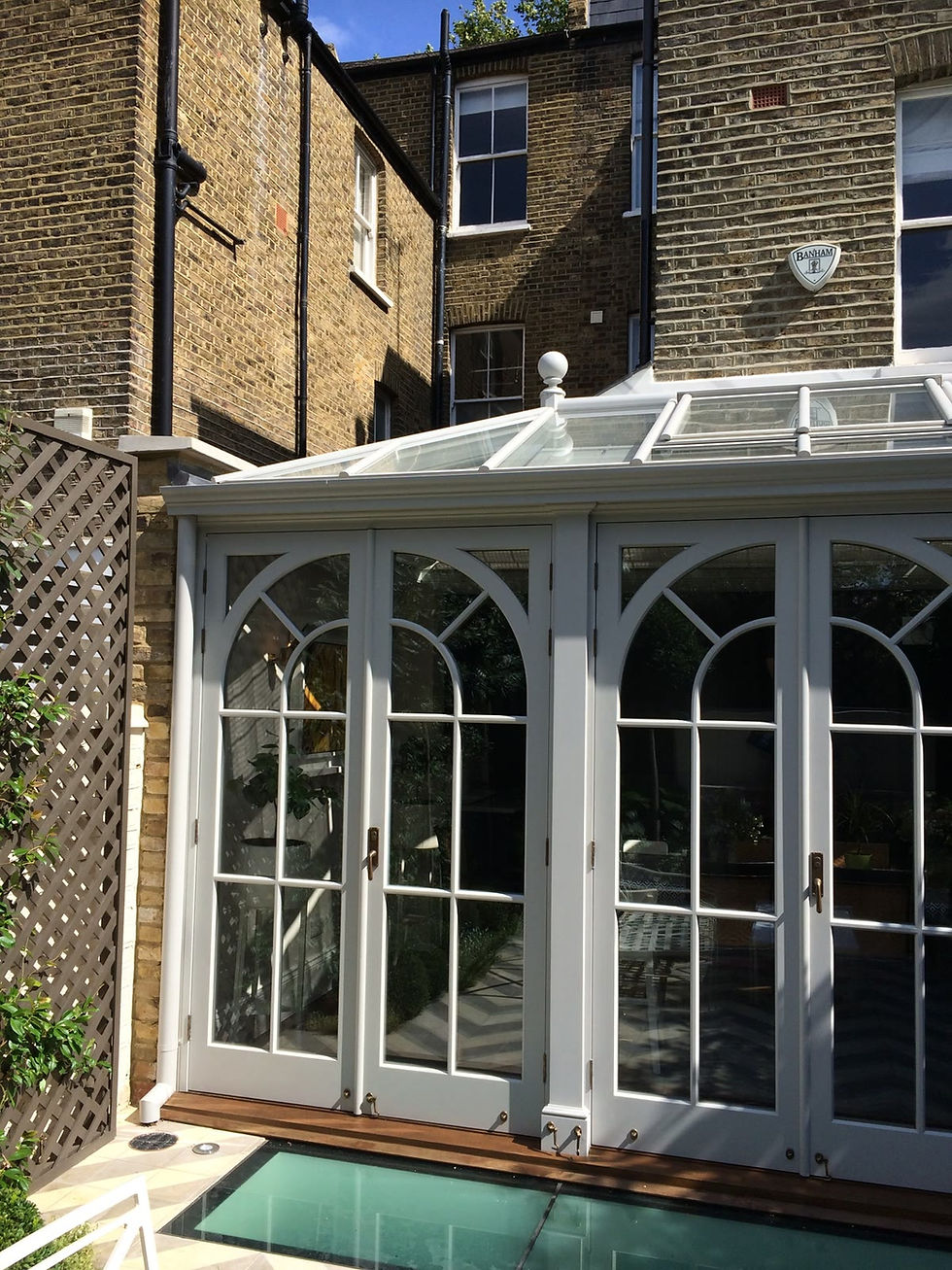
Windows, repair or replace
Windows are the most common flashpoint on a period property, and the most commonly rushed.
Start with condition, significance and the approvals actually required. Repair, refurbishment or a carefully designed replacement may each suit different windows in the same house. Do not order replacements on appearance alone.
Heating and cooling in a historic house
Modern comfort and historic fabric are not enemies. They just need planning at the same time.
Plan discreet routes, equipment positions and access alongside the heritage review, not after it. A workable system has to respect the fabric as well as the room layout.
Insulation deserves the same treatment. Consider fabric, moisture, ventilation and the heating strategy together. Improving one element on its own can change the demands on everything else.
What to do when there are no approval records
Many period houses carry alterations that nobody can document. A previous owner did something, and the paperwork has vanished.
Gather whatever history is available and take property-specific planning and legal advice. Missing paperwork does not prove approval was granted. A new project does not automatically resolve an earlier issue either.
A heritage consultant may be worth appointing where the building's significance or your proposed intervention needs deeper assessment. Agree how their work coordinates with the design and the planning submission. Getting the team right at the start is the same argument as choosing between an architect and design and build.

We have renovated period homes across prime London since 2010, and we handle the consents as part of the job, not as your homework. Fill out the contact form or call 020 7731 6841 and let's get you booked in for a free call with Nick.


Comments